The Data Warrior

Changing the world, one data model at a time. How can I help you?

Archive for the category “thought leadership”

The New Modern Data Stack

Hey gang – sorry for the last minute update but I will be going LIVE early next Monday December 19th for an exciting event hosted by Datacated.

Join me, along with Vinay Samuel, Founder & CEO of Zetaris as we talk about the NEW modern data stack. We will be discussing:

  • The new way for data consumption & connection
  • Methods for quicker data project execution
  • The engine of engines & architectural optionality for data integration
  • The future of data in 2023

We will also take questions from the live audience!

This is an event you won’t want to miss!

Register today at: https://hubs.ly/Q01vHw4c0 

See you there!

Kent

The Data Warrior

The Role of DataOps in a Data Mesh Architecture

Hot off the press – a new post discussing two of today’s hottest topics – #DataMesh and #DataOps.

Data Mesh is a decentralized architecture that organizes data by specific business domains and teams, leveraging a self-service approach. It’s designed to provide greater ownership and responsibility to Data Product teams and, it is hoped, more effective outputs in a timely manner. 

Data mesh is founded on four pillars: 

  • Empowered domain ownership – letting the experts who know the data best do their jobs. 
  • Cross organizational transport – enabling consumption through data products. 
  • Self-service analytical platform – reducing costs, improving agility. 
  • Federated governance – the ‘glue’ that holds the process together, enabling interoperability and compliance. 

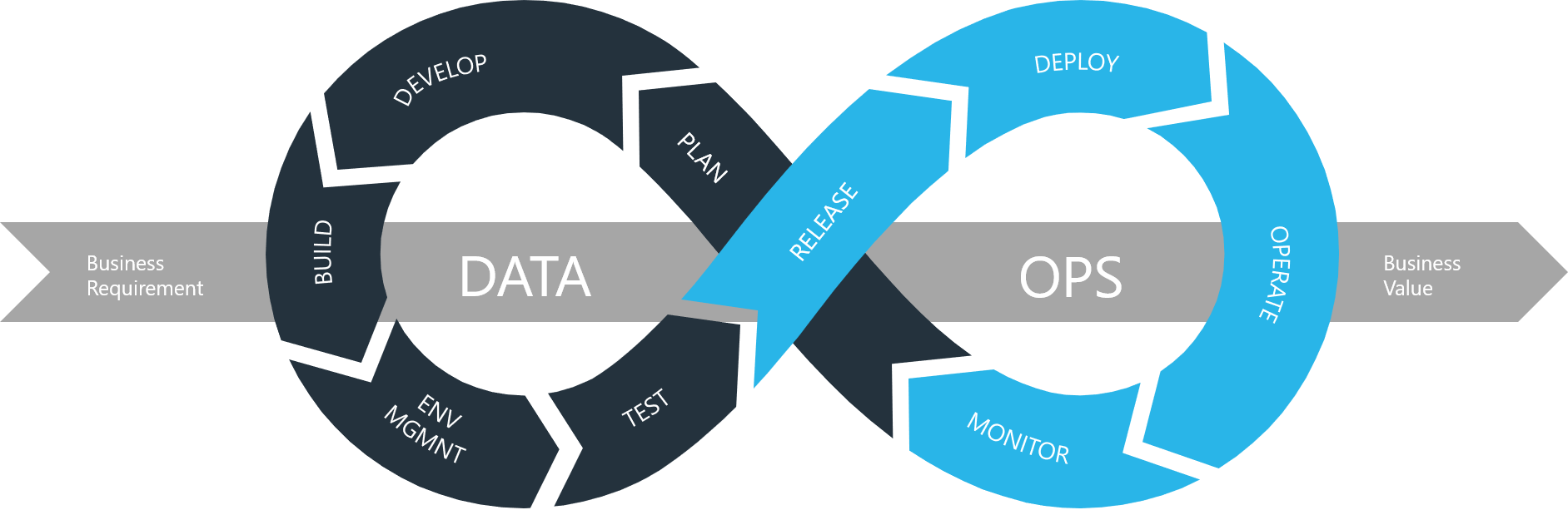
Is DataOps simply an enabler for more sophisticated design patterns like Data Mesh?  If we carry on with DevOps thinking – considering how the involvement of end users in a product lifecycle went from passive to truly active, one starts to see that it’s more than that. 

Read the rest of the post here – The Role of DataOps in a Data Mesh Architecture

Happy reading.

Kent

The Data Warrior

The Data Warrior Way – DataOps: Past, Present, and Future

Heads up gang – I will be doing a webinar on #TrueDataOps on Wednesday, Nov 30th!

4 pm UTC – 10 am CDT, 11 am ET, 4 pm London, 5 pm CET

During this 60-minute live webinar, I will delve deeper into this topic to share my thoughts on DataOps. What is it? How is it different from DevOps? Where is it headed?

Join me to learn about the seven key pillars of #TrueDataOps:

  • ELT and the spirit of ELT
  • Continuous Integration / Continuous Deployment (CI/CD)
  • Code design and maintainability
  • Environment management
  • Governance and change control
  • Automated testing and monitoring
  • Collaboration and self-service

Come learn what DataOps REALLY IS, and how it’s guiding philosophy can help you deliver data projects faster and better.​

Sign up today to reserve you space! (Yes – it will be recorded!)

The Data Warrior Way – DataOps: Past, Present, and Future | WhereScape

See you there!

Kent

The Data Warrior

The Hype:  Data Mesh Will Become Obsolete – Really?

Data Mesh is indeed a hot topic these days. Is it the answer to all our big data problems? Probably not, but it will help some organizations. Is it obsolete? See what I think in this recent blog post…

In the summer of 2022, Gartner® published its Hype Cycle on Data Management, and this was not without some controversy.

In particular, it asserted that Data Mesh will be obsolete before it reaches what Gartner calls the Plateau of Productivity. It is hard to fathom how they came to that conclusion when there is such a vibrant Data Mesh Community complete with a very active Slack channel, and when DataOps.live customers like Roche and OneWeb have successfully built a Data Mesh using DataOps.live and Snowflake. But we’ll come back to that in a moment.

Data Mesh is in essence a conceptual approach and architectural framework, not a specific off-the-shelf tool or technology. One of the main precepts for its creation is angled towards improving productivity and time to value by eliminating the perceived bottlenecks that have been experienced by organizations building out large-scale enterprise data warehouses and data lakes.  Zhamak Deghani, the creator of the Data Mesh concept, has referred to it as a decentralized sociotechnical approach – meaning it involves people, processes and technology. So, it seems likely that no two implementations will be the same by their nature. How one organization defines productivity based on its specific needs and outputs on its own application of Data Mesh will differ from another. Yes, Data Mesh is (kind of) new and yes, it is maturing, but that does not mean we should ignore or discount it this early in the game.

It is hard these days to separate the hype from the reality so check out the entire post over at the DataOps.live blog.

Cheers.

Kent

The Data Warrior

How Data Vault 2.0 Supports Your Data Governance Strategy – Part 1

Data Vault 2.0 is way more than just a data modeling approach. In fact it is an entire methodology and architecture for building business intelligence and analytic solutions. This is a post just released that I wrote for Data Rebels on how DV2 actually supports various aspects of data governance. Check it out.

With the growth of volume and diversity of data in recent years, it has become even more critical for organizations to develop an effective and scalable strategy for data governance and its closely aligned sibling discipline – Master Data Management. The importance of ensuring the security and the quality of data has never been more important than now. Add to that the increased pressures for regulatory compliance and privacy concerns, having a solid approach to data governance is no longer an option, it’s a necessity. In this 2-part blog series, I will discuss how the Data Vault 2.0 System of Business Intelligence addresses these concerns and incorporates both Data Governance and Master Data Management. 

Read the entire post here: Data Vault 2.0 and Data Governance – Part 1.

Stay tuned for Part 2!

Kent

The Data Warrior

Post Navigation