The Data Warrior

Changing the world, one data model at a time. How can I help you?

Archive for the category “Data Modeling”

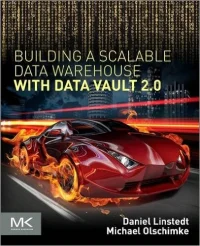
Better Data Modeling: 7 Differentiating Characteristics of Data Vault 2.0

Hard to believe that the 2nd Annual World Wide Data Vault Consortium (WWDVC15) is NEXT WEEK in beautiful Stowe Vermont. It promises to be an excellent event. The speakers include myself, Claudia Imhoff, Dan Linstedt (the inventor of Data Vault), Scott Ambler, Roelant Vos, Dirk Lerner and many more. The focus will be DV 2.0, agile data warehousing, big data, NoSQL, virtualization and automation. Check out the agenda here: http://wwdvc.com/schedule/

So in preparation (and to encourage you to attend), I thought it might be good to review some of the important basics about Data Vault 2.0 and why it is an important evolution for the data warehousing community.

The approach started out as the Common Foundational Warehouse Modeling Architecture as it’s official name. Then it was more commonly known as the “Data Vault” and became a modelling method for Data Warehouses. It also had a methodology with implementation guidelines and worked very, very well on relational platforms for many, many years (over 10 years for those who did not know).

But technology evolved. NoSQL architectures came into the picture primarily as sources. The Apache Hadoop platform started offering a cheaper storage and processing MPP architecture.

Data Vault evolved into Data Vault 2.0 and already has many successful implementations. The original Data Vault is now referred to as Data Vault 1.0 (or DV 1.0) and it primarily has a modelling focus. DV 2.0 on the other hand changes some things, and adds a LOT.

Data Vault 2.0 has the following 7 differing characteristics:

1. DV 2.0 is a complete system of Business Intelligence. It talks about everything from concept to delivery. While DV 1.0 had a major focus on modelling and many of the modelling concepts are similar, DV 2.0 goes a step further and talks about data from source to business user facing constructs with guidelines for implementation, agile, virtualization and more.

2. DV 2.0 can adapt to changes better than pretty much ANY other data warehouse architecture or framework. It can do it even better than DV 1.0 because of the change in design to adapt to NoSQL and MPP platforms, if needed. DV 2.0 has successfully been implemented on MPP RDBMS platforms like Teradata as well (ask Dan for details).

3. DV 2.0 is both “big data” and “NoSQL” ready. In fact, there are implementations where data is sourced in real-time from NoSQL databases with phenomenal success stories. One of these was presented at the WWDVC 2014 where an organization saved lots of money by using this architecture.

A near real-time case study for absorbing data from MongoDB is being presented at WWDVC2015. It’s not to be missed.

4. DV 2.0 takes advantage of MPP style platforms and is designed with MPP in mind. While DV 1.0 also did this to an extent, DV 2.0 takes it to a completely other level with a zero-dependency type architecture. Of course, there are a few caveats you will need to learn.

5. DV 2.0 lets you easily tie structured and multi-structured data together (logically) where you can join data across environments easily. This particular aspect lets you build your Data Warehouse on multiple platforms while using the most appropriate storage platform to the particular data set. It lets you build a truly distributed Data Warehouse.

6. DV 2.0 has a greater focus on agility with principles of Disciplined Agile Delivery (DAD) embedded in the architecture and approach. Again, being agile was certainly possible with DV 1.0, but it wasn’t a part of the methodology. DV 2.0 is not just “agile ready”, it’s completely agile.

7. DV 2.0 has a very strong focus on both automation and virtualization as much as possible. There are already a couple of automation tools in the market that have the Dan’s approval (just ask). Some of them will be at WWDVC15.

It’s real-time ready, cloud ready, NoSQL ready and big data friendly. And practitioners have already had success in all these areas (on real projects not just in the lab).

And, as you’ll notice on the agenda, the focus at WWDVC15 will be Data Vault 2.0 with examples of sourcing it from MongoDB, with examples of virtualization (from me!), with examples of design mods (also one from me), with examples of Hadoop implementations and more. It’s not something you want to miss, and there’s hardly any time or seats left.

If you are coming, I look forward to seeing you and chatting about the world of DW/BI and agile. If you want to attend, grab one of the last seats over at http://wwdvc.com/#tile_registration  (if there are still seats left by the time you get this message).

See you soon!

Kent

The Data Warrior

P.S. After the conference, the next place you’ll hear about DV 2.0 is in Berlin. There is a bootcamp and certification starting on 16th June at Berlin, Germany. The details are here: http://www.doerffler.com/en/data-vault-training/data-vault-2-0-boot-camp-and-certification-berlin/

Better Data Modeling: An Easter Present

In celebration of Easter this year, I have a present for everyone.

A book sale!

I am putting my first Kindle ebook, A Check List for Doing Data Model Design Reviews, on Sale starting on Easter Sunday, April 5, 2015,  for five days!

The sooner you act, the better deal you will get:

Easter Sunday April 5, 2015 at 8:00 AM (PST) the price will be just 99 cents!

The next day April 6, 2015 at 11:00 AM (PST) the price will go up to $1.99

On  April 7, 2015 at 2:00 PM (PST) the price will go up to $2.99

On  April 8, 2015 at 5:00 PM (PST) the price will go up to $3.99

On  April 9, 2015 at 8:00 PM (PST) the price will go up to $4.99

On  April 10, 2015 at 11:00 PM (PST) the price will go up back to the regular price of $5.99

So if you don’t have a copy yet, buy yourself one for Easter.

If you have a copy, buy a copy for a friend as an Easter present.

Either way go here to buy one!

Happy Easter!

Kent

The Data Warrior (and Easter Bunny)

P.S. This promotion is also available on Amazon.co.uk (where it start at 8:00 AM GMT).

Better Data Modeling: The Book

Trying to be as productive as possible during my infrequent down time, I just published another Kindle book with some of my best tips for Oracle Data Modeler. it is called Better Data Modeling: Tips for Enhancing Your Use of Oracle SQL Developer Data Modeler.

If you are one of the 3.5 million users (or so) who have downloaded this tool, and you want to know my little secrets for getting the most out of SQL Developer Data Modeler (#SQLDevModeler), this book if for you.

If you were an Oracle Designer user and are looking for a replacement data modeling tool, or you are using one of the other mainstream, expensive modeling tools and want a more cost effective alternative, then you owe it to yourself to look at Oracle SQL Developer Data Modeler (SDDM). Oracle Data Modeler has been around for over five years now and is up to version 4.1. It really is an industrial strength data modeling tool that can be used for any data modeling task you need to tackle.

SQL Developer Data Modeler (SDDM) is a fully functional tool provided for FREE by Oracle. It has many features built in that can be leveraged to capture the design of an existing (probably undocumented) database or you can use it to design a new database, even a data warehouse from scratch. There are a load of great features. This book will show you my favorite features along with detailed step by step instructions (with screen shots) on how to use them.

Tips include:

  • How to easily color code your diagrams
  • How to make hundreds of views really fast
  • How to find missing foreign keys
  • How to find missing unique keys
  • How to connect to a SQL Server database (if you must…)

As a bonus, there are two appendices with my run down on common data modeling mistakes and my famous rant on why you need foreign keys in your data warehouse.

So if you don’t use Oracle Data Modeler yet, read my book to see why you should.

If you do use it, I hope this little book will make you even more productive than you already are!

Model on!

Kent

The Data Warrior

P.S. After you read the book, please leave a review on Amazon to help other folks decide if the book is for them.

End Your Data Modeling Pain

Tired of hand drawn data models, or models drawn in Visio or even PowerPoint?

Still limping along on an old Oracle Designer repository?

Can’t afford the license for your current modeling tool anymore?

Or maybe your shop has no documented data model diagrams at all (horrors!).

Well, if you were an Oracle Designer user and are looking for a replacement data modeling tool, or you are using one of the other mainstream, expensive modeling tools and want a more cost effective alternative, then you owe it to yourself (and your organization) to look at Oracle SQL Developer Data Modeler (SDDM). Data Modeler has been around for over five years now and is up to version 4.1. It really is an industrial strength data modeling tool that can be used for any data modeling task you need to tackle.

As I have mentioned before (many times) in this blog, SQL Developer Data Modeler (SDDM) is a fully functional modeling tool provided for FREE by Oracle. It has many features built in that can be leveraged to capture the design of an existing (probably undocumented) database and re-engineer it or you can use it to design a new database, even a data warehouse from scratch. There are features to apply standards, and then generate DDL to implement your newly standardized design. You can even use one logical model to develop multiple physical models that can be deployed to different RDBMS (like Oracle, SQL Server, and DB2). You even have options on the type of notation used in the diagrams (i.e., Barker, IE, etc.).

Unfortunately there are no comprehensive, end-to-end classes that can teach you how to really get started with SDDM and can point you to some of the awesome features and show you how they work.

Not until NOW!

Announcing my new online class: Introduction to Oracle SQL Developer Data Modeler.

This course will start from a totally blank page and walk you through all the major features and options of the tool to show you how to design build and deploy a database. I provide lots of examples and tips on how to do all this so that you can quickly be productive (while you watch!).

In this class, I will introduce you to the tool and show you how to use some of the cool features I use almost daily. I will provide step-by-step instructions on how to use these features. The class includes both lectures with screen shots and hands on demos of the tool (recorded live by me). Hint: some of my best tips are in the demos.

In this course you will see:

  • How to create new objects (entities, attributes, relationships) from a blank page
  • How to reverse engineer and document existing databases
  • How to reverse engineer logical models from physical to get a clean ERD
  • How to reconcile an existing data model to the database or the database to a model
  • How to generate a script to change an existing database

Tips, tricks and features I demonstrate include:

  • Modifying the delivered reporting templates
  • How (and when) to use the abbreviations utility
  • How to use and apply domains
  • How to create and applying object naming templates
  • How to add audit columns to every table in a model
  • How to add custom design rules for model quality checks
  • How to use the built in quality checks
  • How to use the newest find and extract feature to enable updating table and column comments by end users
  • How to generate a simple data dictionary

As an added bonus, in addition to step by step slides, and the demos, I have included a zip file with example output, templates, and DDL scripts that I created during the demos. You will be able to download these to your machine to try the exercises yourself.

If you have questions along the way, our modern learning management system (LMS) lets you enter your questions in the course comments whenever you want. I will get an immediate email notification so I can promptly answer your questions.

Unlike typical user group presentations, where I can only scratch the surface or show a few tricks, this course contains over four and a half hours of content broken up into bite-sized modules so you can easily digest the detailed information. If it does not make sense, you can simply play the same segment over again and even follow along on using your own install of SDDM.

By the end of the course you will be able to effectively use Oracle SQL Developer Data Modeler for all your data modeling tasks.

So head over to Learn Data Vault and check out the preview video of the class, then sign up and learn. Use my special offer code of GRAZIANO10S to get 10% off.

See you online!

Kent

The Data Warrior

P.S. The current price of the course is the initial sale price. I am not sure when the price will go up but Dan and Sanjay tell me that I set the price too low and they will have to raise it in the near future. So, I would sign up now, before that price goes up.

Meet me in Austin?

Late breaking news (aka I forgot to post this earlier)!

I will be speaking at the first meeting of the Austin Oracle Users Group for 2015. It will be this coming Friday February 27, 2015 starting at 11:00 AM. I will give an intro talk on Oracle SQL Developer Data Modeler (the FREE data modeling tool from Oracle).

So if you ever wanted to find out if this is the data modeling tool for you, join me in Austin and find out first hand.

After my talk there will be a free lunch, followed by a talk on “Leave the Crowd: Join the Cloud” by Lakshmi Sampath, ERP Cloud Evangelist and Brent Grech, VP, Fusion Applications, Global Sales Engineering, Oracle.

I plan to stick around for that talk too!

The meeting will be held at the Oracle offices at 9600 North MOPAC, Plaza II, Suite 700.

So please RSVP and let them know you are coming.

If you want to meet up after the session, leave me a comment below, or drop me a line.

See you soon!

Kent

The Data Warrior

P.S. If you are in the Austin area and have not joined, please join the LinkedIn group for AOUG here: https://www.linkedin.com/groups?home=&gid=4308479

Post Navigation